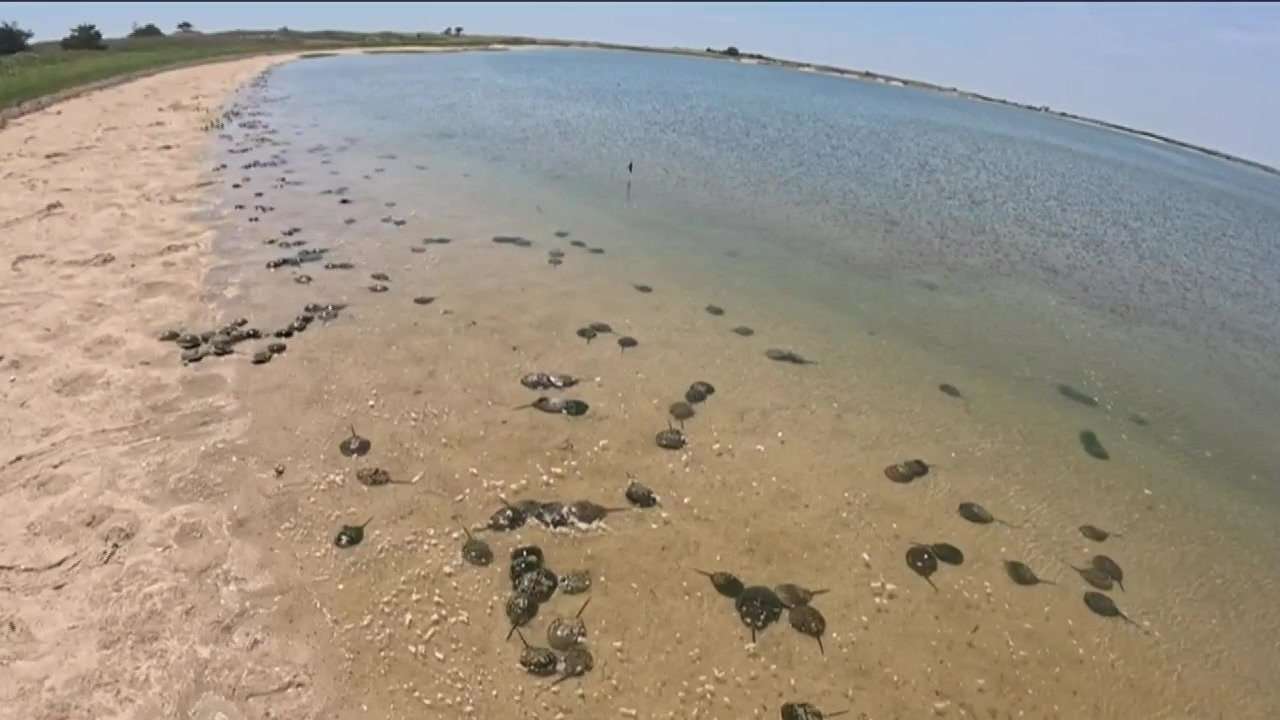
Horseshoe crabs are starting to rebound as harvest pressure eases
Horseshoe crabs are recovering because Massachusetts capped harvest — and biomedicine is already 80% weaned off their blood
A 450-million-year-old species dipped from bait and blood harvest, but caps, spawning-season bans, and a lab-made blood substitute are turning the population around
This is a rare conservation story with a real inflection point behind it: state harvest caps plus an industry-driven synthetic alternative are simultaneously cutting the two causes of decline, and the data already shows recovery in longer-protected areas.
Why crabs matter beyond their blood
Horseshoe crab blood clots on contact with bacterial toxins, making it the standard test for contamination in vaccines, injectables, and medical devices for 40 years. But crabs are also a keystone food source — their eggs feed migratory shorebirds, sharks, and turtles — so bait harvesting and blood harvesting both ripple through the coastal food web, not just the crab population.
Scale of biomedical harvest
Massachusetts's protection timeline
- 2010
Harvest banned around new/full moons, April–June
- 2023
Annual cap set on biomedical harvest quota
- 2024
All harvesting banned April 15–June 7, covering ~90% of spawning season
- Early 2026
Proposed 80,000-crab quota increase withdrawn after opposition
Signs the recovery is real
71% of Massachusetts survey sites show an increasing population trend over 15 years
Areas with ~20 years of bait-harvest protection show the clearest rebound
Officials say full benefit of the newest (2024) protections may take another decade to show
The biomedical industry's own exit plan
Eli Lilly began switching to a lab-made, biotech-produced version of the crab's clotting protein in 2016; it now covers 80% of the company's testing, with a stated goal of eliminating crab-blood use entirely. Lilly says the synthetic performed as well or better across thousands of samples and hundreds of products — meaning the argument for continued wild harvest is shrinking from the demand side, not just the regulatory side.
State approaches diverge
What would confirm or break this trend
- 01
Whether Massachusetts's 2024 spawning-season ban shows measurable population gains once a decade of data accumulates
- 02
Whether other biomedical suppliers beyond Eli Lilly follow its switch to the synthetic clotting agent, reducing national harvest demand
- 03
Whether Massachusetts lawmakers pass the stalled bait-harvest ban bills